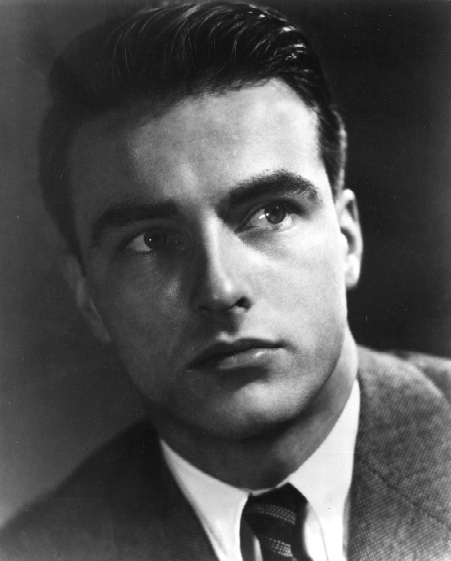
Adele Mailer Interview:
Glimpses of Monty
|
|
Adele Morales Mailer was born in New York City. A striking beauty of Peruvian descent, she grew up in Brooklyn and studied art at the New School for Social Research. The late 1940s and early 1950s were an exciting time for the arts--as young poets, writers, and actors came to the city from around the country to live and--at least sometimes--work. Adele had a brief romance with an aspiring novelist named Jack Kerouac whom she remembers as "movie star handsome and totally self-absorbed." She also recalls double dating with his "crazy friend Neal" who would steal a new car for each such occasion. Later, Adele married Norman Mailer whose first novel, The Naked and the Dead, skyrocketed him to fame in 1948. Their stormy marriage was partly fictionalized in The Deer Park, Mailer's 1955 novel. During the marriage, Adele and Norman met and entertained many of the writers and actors who were part of the intellectual life of the city. Adele dealt with some of these friendships in her memoir of that period, The Last Party, including the Mailers' friendship with the Broadway and film actor, Montogomery Clift, who had appeared in A Place in the Sun (1950). This interview was posted on American Legends in 2001. Adele died in 2015. She was that rare interview subject: Someone who became a friend. In The Deer Park, Norman had based the character Elena on her, and Adele often talked of that period when the critics pummeled him, and he went from being "a sweet Jewish boy" to "a crazy man" who stabbed her at a party in their loft. Their life together was always topsy- turvy. Even after their divorce, it remained so. When Norman adapted The Deer Park for the stage, Adele stepped in to take over the role of Elena after another actress became ill and did so to Norman's approval. Adele always hoped to see The Last Party turned into a movie with "a young Sean Penn" playing the early Norman Mailer, but, unfortunately, that was not to be. Here, is the interview with Adele, conducted by telephone from her home in New York, as it originally appeared. |
| AL: | How did you first meet Monty Clift?
|
| AM: | It was a party at Libby Holman's brownstone in New York.
She had been a nightclub singer in the thirties. Libby was ambitious and
very beautiful. Truman Capote brought us there. Clift and Holman were going
together. She and Monty seemed close. Most people thought they were lovers.
He picked these mother figures.
|
| AL: | What was the young Monty Clift
like?
|
| AM: | He was shy, soft spoken, almost
halting. Very much like he was on the screen. I thought he was very sweet.
|
| AL: | Clift later visited you and Norman in Provincetown. |
| AM: | Monty came up for a weekend. He was with Mira Rostova--his
acting coach. She was Russian. They spent a lot of time together. Monty was
then a big star. He drew these huge crowds everywhere he went. It was wild.
People would come up to the table while we were eating lobster. Monty wasn't
annoyed. He was nice about it. He had class.
|
| AL: | Did you see Monty after
Provincetown?
|
| AM: | He was usually on the coast. But when Norman was casting
The Deer Park, Monty read for one of the parts. I think it was for
Charles Eitel, the blacklisted director. He gave a good reading. This was at
our apartment on Perry Street, in the Village. I hadn't seen Monty since the
terrible car accident he had had in Hollywood. When I opened the door, I
didn't recognize him. I was shocked. It was a different face. You see it in
the film, Raintree County, his face was all patched together. But the
accident was something you didn't talk about. You didn't bring it up, and he
didn't bring it up.
|
| AL: | Monty wasn't cast in The Deer Park.
|
| AM: | Mailer liked Clift a lot. But I don't know what happened. I
don't know whether he couldn't do it, or he wasn't interested. He always had
a movie.
|
| AL: | You and Norman once gave a party that both Monty and Marlon
Brando attended. How did they get along?
|
| AM: | I was busy hostessing, so I just caught a glimpse of Monty.
He and Marlon seemed wary of each other. In fact, they ignored each other.
Brando was competitive with Monty, I heard. Didn't that make sense? They
were the two comers.
|
| AL: | So much has been written about Montgomery Clift's
self-destruction and his ambivalence about women.
|
| AM: | At parties, most of the time he
was drunk. Most of us were too. He was a good kisser--I can tell you that.
Certainly, he was interested in women. He may have been bi.
|
| AL: | How would you describe Monty Clift at a glimpse?
|
| AM: | God, he was tortured. He was
driven. You felt an underlying sadness. Even without knowing anything about
him. Some people you know without knowing anything about them.
|


|
|